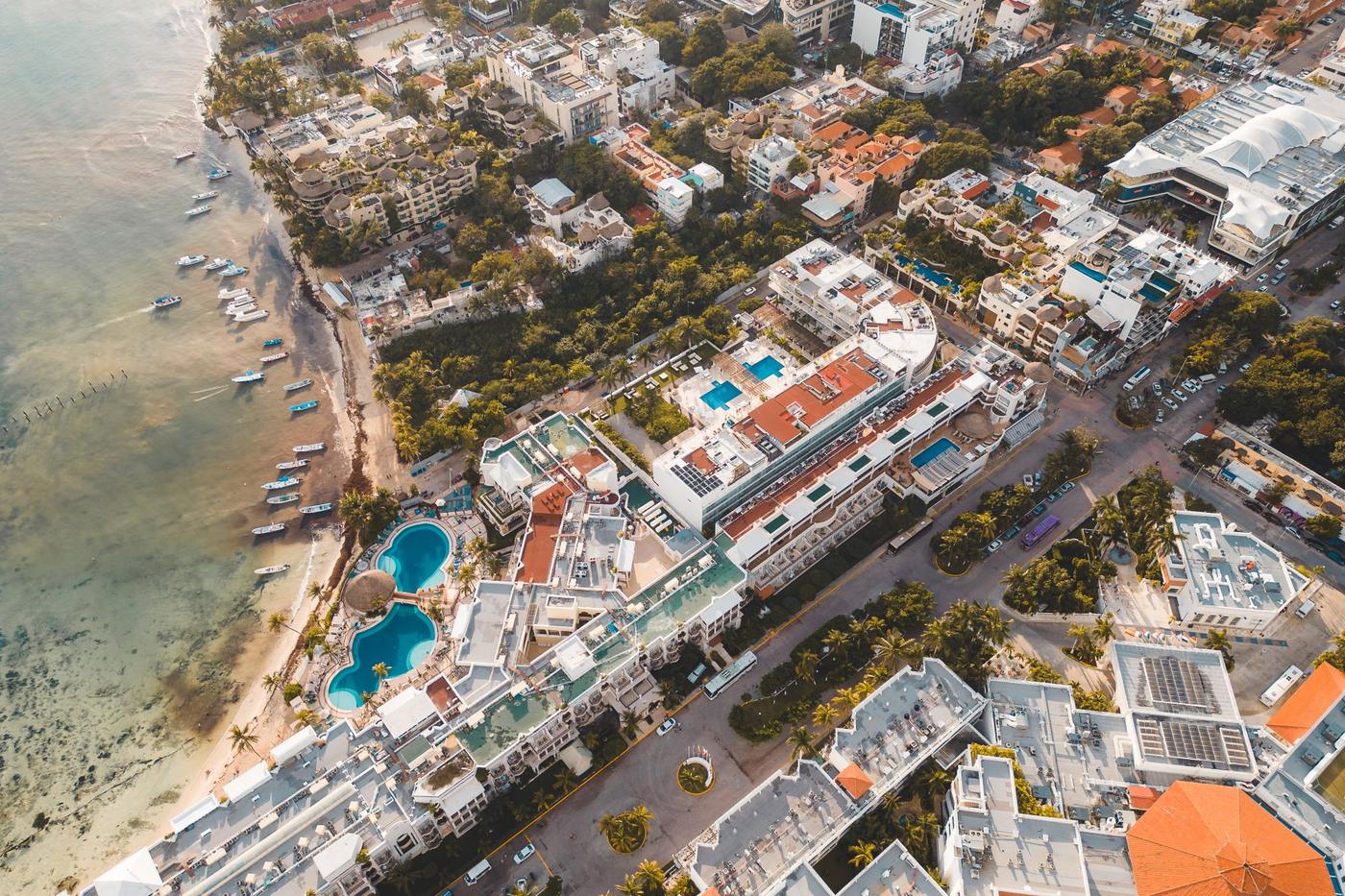
No, Playa del Carmen tap water is not meant to be drunk. Locals do not drink it either, and everyone, from a studio rental to a big resort, gets drinking water from 20 liter jugs of purified water. This is not a reason to panic: it is a local habit you pick up in a single day. What is worth knowing is what the tap water is still good for, whether you can brush your teeth with it, what the ice in your restaurant glass is made of, what water costs on the ground, and how to avoid leaving with a hundred plastic bottles on your conscience.
Can you drink the tap water in Playa del Carmen?
No: Playa del Carmen tap water is not meant to be drunk, and locals do not drink it either. That is not a dramatic warning, it is simply the local norm. At home and at the office, drinking water comes from a 20 liter jug, the garrafón.
The network of the municipality of Solidaridad, which Playa del Carmen belongs to, is run by Aguakan. The operator draws from wells sunk into the Yucatán aquifer, the same limestone that holds the cenotes, and has announced five new extraction wells to secure supply for a fast growing city (Mexican press, 2026). The water arrives chlorinated at the tap.
Let us be precise about what we know and what we do not: we found no published official analysis of tap water quality in the municipality. So we cannot tell you it is potable, and we cannot tell you what is in it. What we can tell you is that nobody here drinks it, and that is the only useful instruction: do what locals do.
Showers, teeth, dishes: what tap water is fine for
Tap water is fine for showering, washing dishes and, for most travelers, brushing your teeth. The table below separates the uses nobody worries about from the ones that call for purified water.
| Use | Tap water | Why |
|---|---|---|
| Shower, bath, shampoo | Yes | Skin contact, no ingestion |
| Washing hands | Yes | Daily use across the whole city |
| Dishes, dishwasher | Yes | Chlorinated water, then drying |
| Brushing teeth | Yes for most people | Tiny amount swallowed; use purified water if your stomach is sensitive |
| Drinking water, iced tea, baby bottles | No | Purified water from the garrafón |
| Rinsing salads and thin skinned fruit | No | The food is eaten raw |
| Homemade ice cubes | No | Freezing does not disinfect |
Two rows deserve a comment. Brushing your teeth is the most debated case: the amount of water actually swallowed fits in a teaspoon, which is why plenty of travelers brush at the tap and notice nothing. If your stomach is easily upset, if you are traveling with a toddler, or if you simply want the question gone, rinse with a glass from the garrafón. It costs a few cents and settles the matter for two weeks.
Homemade ice cubes are the vacation rental trap. Freezing water does not disinfect it. If your place has an ice tray, fill it from the jug, not from the tap.
The 20 liter garrafón: how everyone drinks, and what it costs
Everyone drinks purified water, sold in 20 liter jugs (about 5 gallons) called garrafones, delivered to the door or bought at the supermarket and in neighborhood corner shops.
On price we have to be honest: we have no price survey for Playa del Carmen itself. The only recent, verified figures we have are for Cancún, up the coast, and they come from the Quintana Roo local press in 2026: a new garrafón there costs up to 55 pesos (about $3.25), and refilling an empty jug at an automatic machine costs 12 to 20 pesos (about $0.70 to $1.20) depending on the neighborhood, which is up to 65% cheaper. Those are Cancún prices, not prices recorded in Playa del Carmen: treat them as a regional order of magnitude, and expect variation from one shop to the next.
One warning matters, and it comes from the same press: health specialists quoted in 2026 warn about poorly maintained refill machines, where bacteria including E. coli and salmonella have been found. The saving is real and so is the risk. On a two week trip the price gap does not justify the gamble: buy a sealed garrafón from a well known national brand and check that the seal is intact before you pay.
In practice the question rarely comes up: hotels and rentals generally provide purified water, either in bottles in the room or from a dispenser you can use freely. Ask when you book rather than when you arrive, especially for an apartment. Knowing whether there is a full jug and a pump waiting changes your first evening.
Ice, coffee and raw vegetables: the real questions and the fake ones
In restaurants in the tourist zone, ice is produced industrially from purified water, so you can order a drink with ice and stop thinking about it. This is the single fact that reassures the most travelers, because it answers the most common and least founded fear inside that perimeter.
The rest comes down to temperature and to the water used for rinsing:
- Coffee, tea, herbal infusions. No issue at all. The water is brought to a boil before it reaches the cup.
- Fresh juices. The fruit is not the problem. The water added to an agua fresca, and the ice in an improvised street stand, come from a source you do not know. Ask for "sin hielo" if a place leaves you unsure, or order straight juice.
- Salads, raw vegetables, thin skinned fruit. This is the point where we have no data. We do not know which water each kitchen uses to rinse its produce, and nobody can tell you from the outside. The sensible rule is the local one: thick skinned fruit you peel yourself, hot dishes served hot, and raw vegetables kept for the places where you are eating the rest of the menu anyway.
- Street food and markets. Mexican street food is very good. The criterion is not price, it is turnover: a stand with a line of neighborhood workers at 2 pm restocks several times per service.
None of this is specific to Playa del Carmen, and none of it is a reason to arrive anxious. For the rest of the trip precautions, our guide is Playa del Carmen safe? separates the real risks from the fears recycled on forums.
How much to drink, and how to avoid the pile of bottles
Count on two to three liters of water a day, more if you dive or walk in full sun: from April to October the heat runs 86 to 93°F (30 to 34°C), as we detail in our guide to diving in Playa del Carmen. For two people over ten days that is 40 to 60 liters, which means two or three garrafones, or more than a hundred small plastic bottles.
Three ways to drink the same water without the plastic:
- A bottle plus the dispenser where you stay. The simplest and cheapest option: a one liter bottle filled morning and evening at the dispenser or the jug covers your day. Confirm when you book that the place has purified water you can help yourself to.
- A garrafón in the rental. For an apartment and a stay of a week or more this is the obvious move: one sealed jug, a hand pump for a few pesos, and you never buy bottles again.
- A filter bottle. Useful as a backup and on the road, pointless day to day once you have a jug: you would be paying a filter to treat water that is already purified. Its real value is independence on day trips.
For day trips, carry water from where you are staying rather than counting on a shop on site. And one detail that surprises people: the water in a cenote near Playa del Carmen, however clear it looks, is not for drinking. It is the same aquifer Aguakan draws from before treatment.
An upset stomach: what to do, and when to see a doctor
The rule fits in two words: rehydrate and wait. A mild stomach episode is handled first by drinking plenty of purified water, in small amounts and often, with oral rehydration salts (ask for "suero oral" at a pharmacy). Rice, bananas, salted broth, no alcohol.
We do not give medical advice beyond that common sense, and one point has to be clear: see a health professional rather than a search engine if you notice any of these:
- high fever or chills;
- blood in your stool;
- vomiting that stops you drinking;
- symptoms lasting beyond 48 hours;
- signs of dehydration (very dark urine, dizziness);
- an infant, a toddler, an elderly or pregnant person, or a chronic condition.
Playa del Carmen has good private clinics open 24 hours a day, but everything is paid for there, often up front. The right first move is to call your insurer's assistance line: it points you to a partner clinic and settles the bill directly, which we cover in detail in our guide to travel insurance for Mexico. For a life threatening emergency, the nationwide number in Mexico is 911.
A last word to put the subject back in proportion: Playa del Carmen tap water is only a problem if you try to drink it. A jug in the room, a bottle in your bag, restaurant ice without a second thought, and you will not think about it again before your flight home.
Keep going
Frequently asked questions
Can you drink the tap water in Playa del Carmen?
No, Playa del Carmen tap water is not meant to be drunk, and locals do not drink it either. The network of the municipality of Solidaridad, run by Aguakan, draws from aquifer wells and delivers chlorinated water that is fine for showers and dishes. Drinking water everywhere comes from a 20 liter jug of purified water, the garrafón.
Can you brush your teeth with tap water in Playa del Carmen?
Yes for most travelers: the amount of water actually swallowed while brushing fits in a teaspoon. If your stomach is easily upset, if you are traveling with a toddler, or if you would rather not think about it, rinse with a glass from the garrafón instead. It costs a few cents and settles the question for the whole trip.
Can you shower with tap water in Playa del Carmen?
Yes, with no reservations: tap water is fine for showering, bathing, shampooing, washing hands and washing dishes. That is the daily use across the whole city, and the water arrives chlorinated at the tap. The only use to avoid is ingestion: drinking water, homemade ice cubes, rinsing raw vegetables and preparing a baby bottle all call for purified water.
Who manages the tap water in Playa del Carmen?
The water network of the municipality of Solidaridad, which Playa del Carmen belongs to, is operated by Aguakan. The company draws from wells sunk into the Yucatán aquifer and, according to the Mexican press in 2026, has announced five new extraction wells to secure supply. We found no published official analysis of tap water quality in the municipality.
How much does drinking water cost in Playa del Carmen?
We have no price survey for Playa del Carmen itself. The only verified figures are for Cancún, from the Quintana Roo local press in 2026: a new 20 liter garrafón costs up to 55 pesos there (about $3.25), and refilling at an automatic machine costs 12 to 20 pesos (about $0.70 to $1.20) depending on the neighborhood, up to 65% cheaper. Treat them as a regional order of magnitude.
Is restaurant ice safe in Playa del Carmen?
Yes in the tourist zone: the ice served in restaurants there is produced industrially from purified water. It is the most common and least founded fear inside that perimeter. The real doubt is the ice at an improvised street stand, where you do not know the source: ask for sin hielo in that case. In a rental, fill the ice tray from the jug.
Can you eat salads and raw vegetables in Playa del Carmen?
We have no data on the water each kitchen in town uses to rinse produce, and nobody can tell you from the outside. The sensible rule is the local one: thick skinned fruit you peel yourself, hot dishes served hot, and raw vegetables kept for places where you are eating the rest of the menu anyway. At a street stand, turnover matters more than price.
Do hotels in Playa del Carmen provide drinking water?
Generally yes: hotels and rentals provide purified water, either in bottles in the room or from a dispenser you can use freely. Ask when you book rather than when you arrive, especially for an apartment. Knowing whether a full jug and a pump are waiting changes your first evening and saves you buying small bottles in a hurry.
Is a filter bottle useful in Playa del Carmen?
It is useful as a backup and on day trips, rarely day to day. As soon as your accommodation gives you access to a jug or a dispenser, a plain one liter bottle filled morning and evening is enough, and it saves the hundred small bottles a two person trip gets through. Count on two to three liters a day, more at 86 to 93°F or if you dive.
What should you do about an upset stomach in Playa del Carmen?
Rehydrate first: plenty of purified water, in small amounts and often, with oral rehydration salts asked for at a pharmacy as suero oral. See a health professional if you have a high fever, blood in your stool, vomiting that stops you drinking, or symptoms lasting beyond 48 hours, and without waiting for a small child. For a life threatening emergency, call 911.